
Picture someone dropped into a situation where nothing is guaranteed. He doesn’t know what the next six months look like. The ground keeps shifting, and whatever he does, the outcome might not go his way. He still has to improvise, adjust, and keep moving toward something.
Now split him into two people, A and B. Same situation, same skills. The only difference is what each of them believes about failure.
A is a pessimist. He looks at the situation and decides failure is certain, so he doesn’t act. Why would he?
Give him a push from outside, a friend or a deadline or a burst of motivation, and he does take a step. But the environment hasn’t changed, so the outcome may or may not go his way. The first time it doesn’t, he takes it as proof: “I knew it. Failure was guaranteed.” The push wears off and he stops again, now more convinced than before.
This is what pessimism does. A temporary stop becomes a full stop, and every setback gets filed as evidence that stopping was the right call.
B is optimistic, but not blindly. He’s cautious. He reads the environment and knows nothing is promised. What he does believe is that if an outcome goes against him, he can adjust and try again.
So he acts. It fails. He acts again. Ten attempts, ten outcomes that don’t go his way. He keeps going, because each failure handed him something: what he did, what happened, and why. He uses that to understand the environment a little better, then takes the next risk. Eventually the data adds up and he gets where he was going.
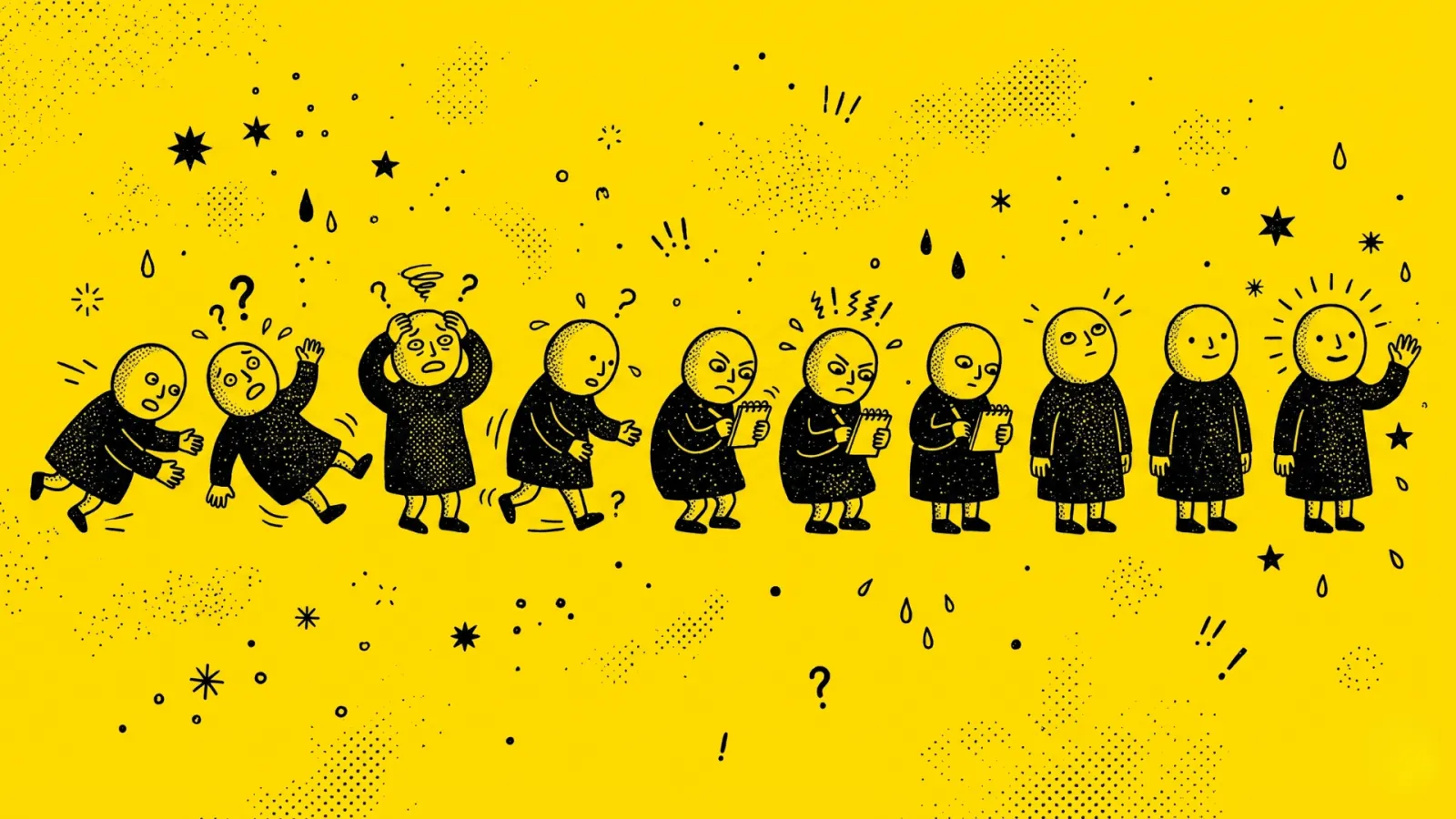
Same environment as A. Same failures, even. The difference is what each of them did with a failure once it happened.
I picked up this framing from David Deutsch, the physicist who wrote The Beginning of Infinity, on Chris Williamson’s Modern Wisdom podcast. Williamson asked him whether he holds optimism as a philosophical stance. Deutsch said yes, and then got careful about what he meant. He doesn’t mean a cheerful outlook, or a belief that everything will turn out fine. He called optimism “more of an explanation for failure than a prophecy of success.” Whenever something goes wrong, it’s because we hadn’t yet created the knowledge to make it go right.
Pessimism, in his framing, treats failure as a barrier you can never get past. That’s Character A. Character B treats each failure as missing knowledge and goes looking for it.
Deutsch is honest that optimism guarantees nothing. You might not solve the problem, or not in time. What it rules out is deciding you’ve reached the point where reason stops working. A few minutes earlier in the same conversation he goes further: we shouldn’t aspire to certainty at all, and anyone doing real research had better enjoy the feeling of being baffled.
Baffled is a fair word for working in tech right now. AI is moving fast enough that nobody knows what the job looks like in two years. Then on October 26, Microsoft introduced a voluntary exit offer for eligible employees in the US, Canada, India and the UK. Microsoft hasn’t said how many people qualify, but The Verge reported it could reach as many as 60,000. This comes months after the company cut 4,800 jobs.
The reaction online was predictable. Is tech over? What happens next? Honestly, nobody knows, and that’s exactly the environment A and B are standing in. No government, company or book is going to hand anyone certainty.
I won’t pretend everyone in this situation gets a happy ending. But the people being offered these exits are experienced engineers. If even 1% of them, around 600 people, take the exit and start building something, and a few of those work, they end up hiring. That’s Character B at the scale of an industry: treat the setback as information, then adjust.
None of this is only about tech. You could have a stable job and still get hit by something you didn’t see coming: an illness, an accident, something happening to someone in your family. Tech at least has a rough map of where things might go. Most of life doesn’t, and when things are that vague, having a way to move through uncertainty matters even more.
It’s easy to be swayed by negative opinions. Hopelessness is where we all start. It’s the default, the place you sit when you’re stuck. Momentum is the part that takes effort, and it’s the part worth studying.
The economist Per Bylund put a version of this well in a 2015 post on X: “What causes poverty? Nothing. It’s the original state, the default and starting point. The real question is, What causes prosperity?”
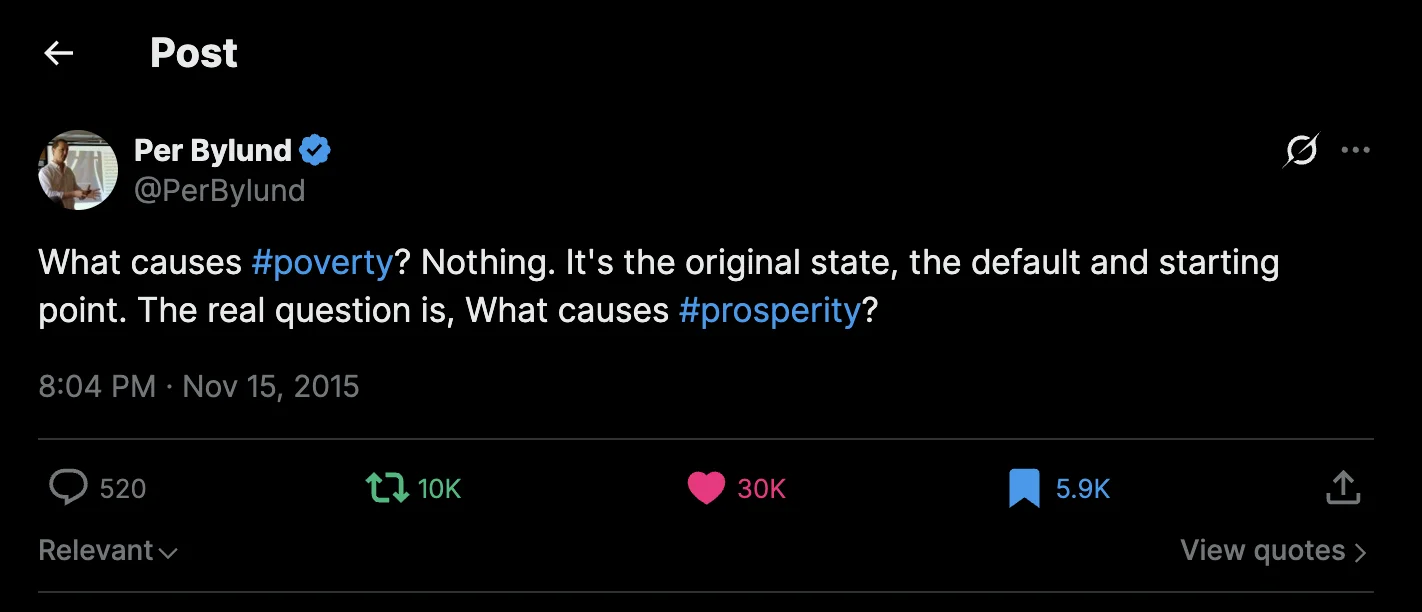
Swap the words and it still holds. Nothing causes hopelessness. The question worth asking is what gets you moving again. My answer is Character B: act, fail, figure out what you were missing, and act again.
Sources
- David Deutsch on Modern Wisdom with Chris Williamson (optimism and certainty discussion, first 33 minutes)
- Introducing a Voluntary Exit Offer, Amy Coleman, Microsoft, October 26, 2026
- Per Bylund (@PerBylund) on X, November 15, 2015